Crucial P3 Plus PCIe 4.0 NVMe SSD (2TB) Review

Blazing PCIe 4.0 speeds and roomy 2TB storage that won't gut your wallet.
A 2TB PCIe 4.0 drive that routinely sells for the price of a decent 1TB rival. If you want lots of fast storage without spending big, this is the obvious starting point.
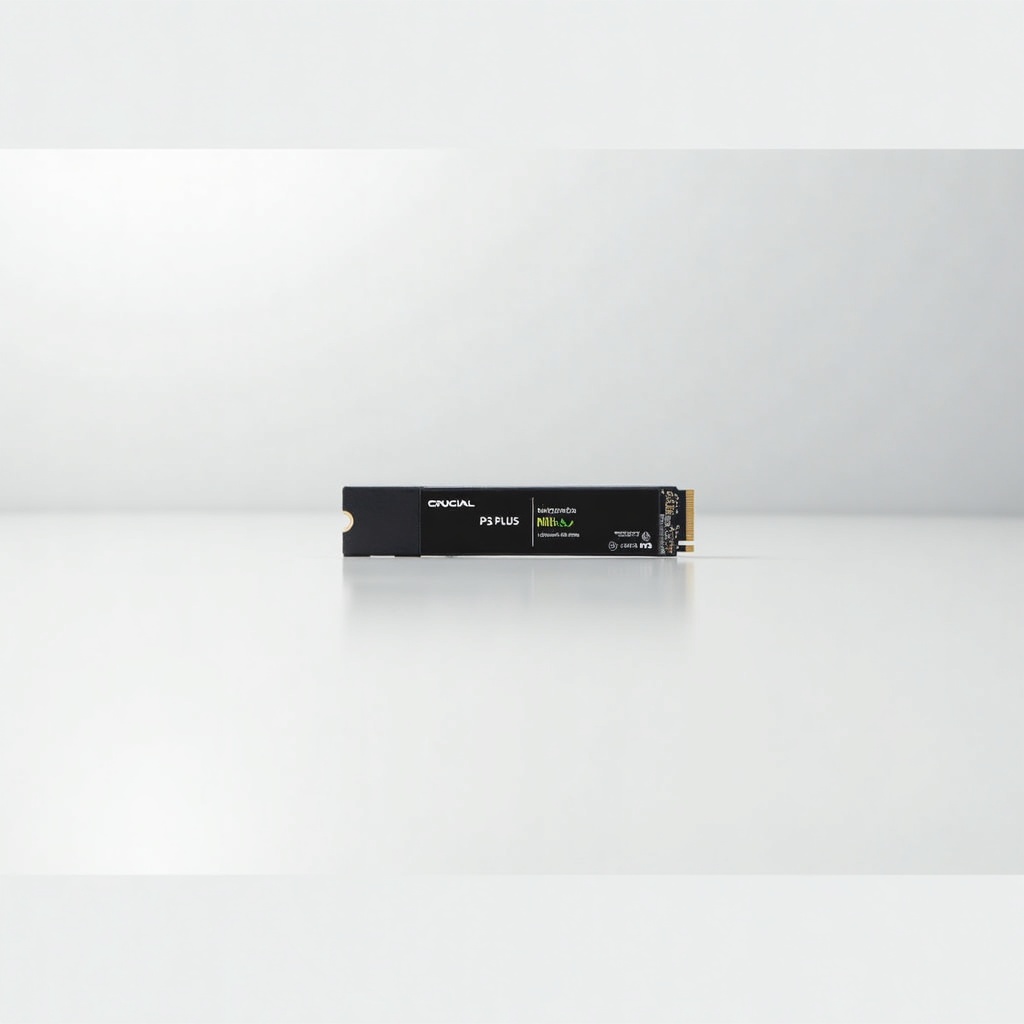
What the Crucial P3 Plus actually is
This is Crucial's value PCIe 4.0 drive, an M.2 2280 stick that drops into any modern laptop or desktop with a Gen4 slot. The 2TB version is the sweet spot in the lineup. Rated sequential reads hit around 5,000MB/s, which is solid Gen4 territory, though not the 7,000MB/s you'd see from the top-tier drives.
The key thing to understand: this is a DRAM-less drive using QLC NAND. That sounds like a knock, and in some scenarios it is, but it's also exactly why you can grab 2TB in the $100 to $150 range. Crucial is Micron's consumer brand, so the NAND is in-house and the reliability reputation is strong.
How it performs day to day
For the stuff most people do, it's plenty fast. Booting Windows, launching apps, loading games, copying photo libraries around. You won't feel the difference between this and a $200 flagship drive while browsing or working in Office. Game load times are essentially a wash against pricier Gen4 SSDs.
The QLC limitation shows up during sustained large writes. Once the SLC cache fills (think transferring tens of gigabytes in one go, like a giant video project or a Steam library migration), write speeds drop hard, sometimes into HDD territory until the drive catches up. If your workload is mostly reads and normal-sized writes, you'll never trip over this. If you're a video editor scratching huge files daily, you'll notice.
The good and the annoying
Pros: the price per gigabyte is excellent, the Crucial name carries real trust, the 5-year limited warranty is reassuring, and it sips power, which is nice in a laptop. It's a clean, no-drama upgrade for the overwhelming majority of builds.
Cons: no DRAM and QLC NAND mean the sustained-write cliff is real, and there's no heatsink in the box. It runs cool enough for normal use, but if you're dropping it into a PS5 or a hot M.2 slot under a GPU, plan to add a heatsink. The endurance rating (TBW) is lower than higher-end drives too, though it's far more than typical home users will ever burn through.
Who should buy it, and who should skip it
Buy it if you want maximum capacity for the money: a general-use gaming rig, a laptop upgrade, a steam library drive, or a second drive for bulk storage. For those people this is one of the easiest recommendations out there.
Skip it if you regularly move massive files or do professional video, 3D, or heavy content work where sustained write speed matters. Step up to a DRAM-equipped TLC drive like the WD Black SN770/SN850X, Samsung 990 Pro, or Crucial's own T500. You'll pay more, but the consistency is worth it for those jobs.
The verdict
The Crucial P3 Plus 2TB is the default budget Gen4 SSD for a reason. It nails the thing most buyers care about, which is a lot of fast, dependable storage without a painful receipt. Know its one real weakness (sustained writes) and it's a smart buy. Demand pro-grade write performance and you should spend up.
Frequently asked questions
- Is the Crucial P3 Plus good for gaming?
- Yes. Game load times are nearly identical to pricier Gen4 drives, and the 2TB capacity fits a serious library. It's a great gaming storage choice for the money.
- Does the Crucial P3 Plus work in a PS5?
- It meets the PS5's read-speed requirement, so it works, but it has no heatsink and uses QLC NAND. Add a third-party heatsink, and know that very large game installs may be slower than a flagship drive.
- Why is the P3 Plus so much cheaper than other PCIe 4.0 SSDs?
- It uses QLC NAND and has no DRAM cache, which lowers cost. That keeps everyday performance strong while sacrificing sustained large-file write speed compared to TLC, DRAM-equipped drives.
Marcus has spent over a decade testing consumer tech and gadgets. He cares about whether a product earns its price in real life — not on a spec sheet.