Anker PowerCore 10000 Power Bank Review

Top off your phone twice over from something that disappears into your pocket.
A power bank small enough to forget you're carrying, with enough charge to rescue your phone twice. The PowerCore 10000 has been the sensible answer to a dead battery for years, and it hasn't been dethroned.
What it is
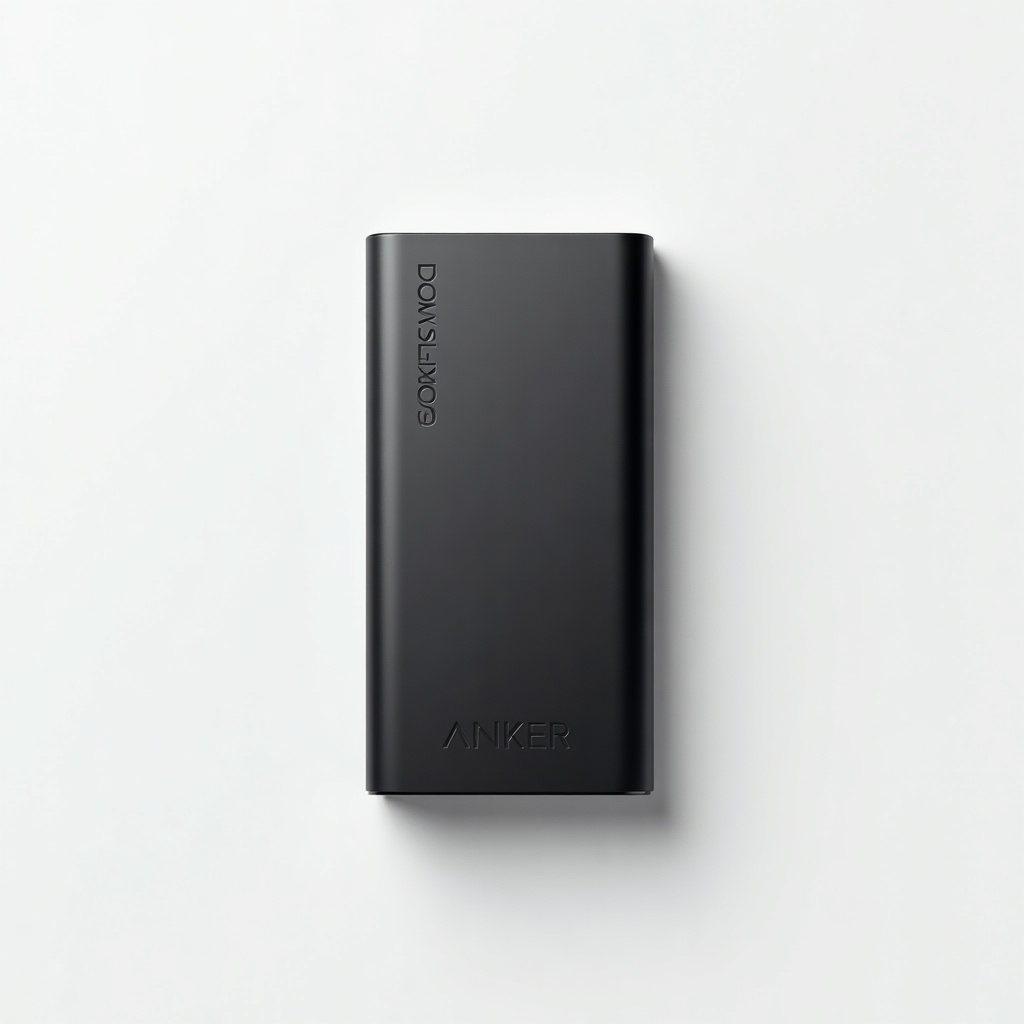
The PowerCore 10000 is Anker's small-but-serious portable battery. It packs 10,000mAh into something roughly the size of a deck of cards and weighs around half a pound. That capacity translates to about two full charges for most phones, give or take depending on your model.
It sits in the $20 to $30 range on Amazon, which is the price point that made it a default recommendation. You're not buying a gadget here. You're buying insurance against a 7% battery reading at 4pm.
How it performs day to day
The pitch is simple: top off your phone twice over from something that disappears into your pocket. In practice the PowerCore delivers exactly that. A typical phone gets roughly 1.8 to 2 full charges before the bank itself needs feeding. Output tops out around 12W on the standard model, so it's a steady fill rather than a sprint.
That's the one real caveat. This is not a fast-charging powerhouse. If you want USB-C Power Delivery that revives a phone from dead in 30 minutes, Anker sells pricier models for that. The base PowerCore 10000 is older school, often micro-USB input, designed to keep you topped up over the course of a day rather than blast you back to 100% during a coffee break.
Owners consistently praise how reliably it holds a charge in a bag for weeks. You can toss it in a drawer, forget it, grab it for a trip, and it still has juice. That dependability is most of the reason it has stayed popular.
The pros and cons
On the plus side: genuinely pocketable, light, cheap, and bulletproof in reputation. Anker's build quality and warranty support are well established. The capacity hits the sweet spot for a phone-only user, and it charges most devices without drama.
The downsides are real but predictable. Charging speed is modest. The base unit's micro-USB input feels dated in a USB-C world. There's no built-in cable, so you're responsible for not losing yours. And 10,000mAh won't do much for a power-hungry tablet or a laptop. This is a phone accessory, full stop.
Who should buy it (and who shouldn't)
Buy it if you want a cheap, trustworthy battery for your phone that lives in a backpack, glovebox, or jacket pocket. Commuters, festival-goers, day hikers, and anyone whose phone dies by dinner will get exactly what they need. It's our easy pick for a no-fuss everyday backup.
Skip it if you need fast charging, want to power a laptop, or care about charging two demanding devices at once. Spend a little more on a higher-wattage USB-C model or a 20,000mAh bank in those cases. For everyone else, the PowerCore 10000 is more than enough.
The verdict
The PowerCore 10000 earns its long-running reputation. It's small, reliable, and priced to be a no-brainer. The slow output and aging port keep it from being perfect, but at this price you're not paying for perfect. You're paying for a phone that doesn't die. It still does that job better than almost anything its size.
Frequently asked questions
- How many times can the Anker PowerCore 10000 charge a phone?
- Expect roughly 1.8 to 2 full charges for a typical smartphone. Larger phones with big batteries will land closer to 1.5, while smaller phones can get over two.
- Does the PowerCore 10000 support fast charging?
- The base model charges at a modest pace, around 12W, not true fast charging. If you need rapid USB-C Power Delivery, look at Anker's pricier PowerCore models instead.
- Is the Anker PowerCore 10000 allowed on planes?
- Yes. At 10,000mAh (around 37Wh) it's well under the 100Wh limit airlines set for carry-on lithium batteries, so it's fine to bring in your bag.
Aaron digs into offers, cards, and software so you don't have to read the fine print. He flags the genuinely good deals and the traps.