Anker 533 Charger (GaNPrime 65W) Review

Three ports, one tiny brick — charge your laptop, phone, and earbuds without a tangle of bricks.
One pocket-sized brick that tops off a laptop, phone, and earbuds at once. That's the pitch, and for most people it holds up.
What the Anker 533 actually is
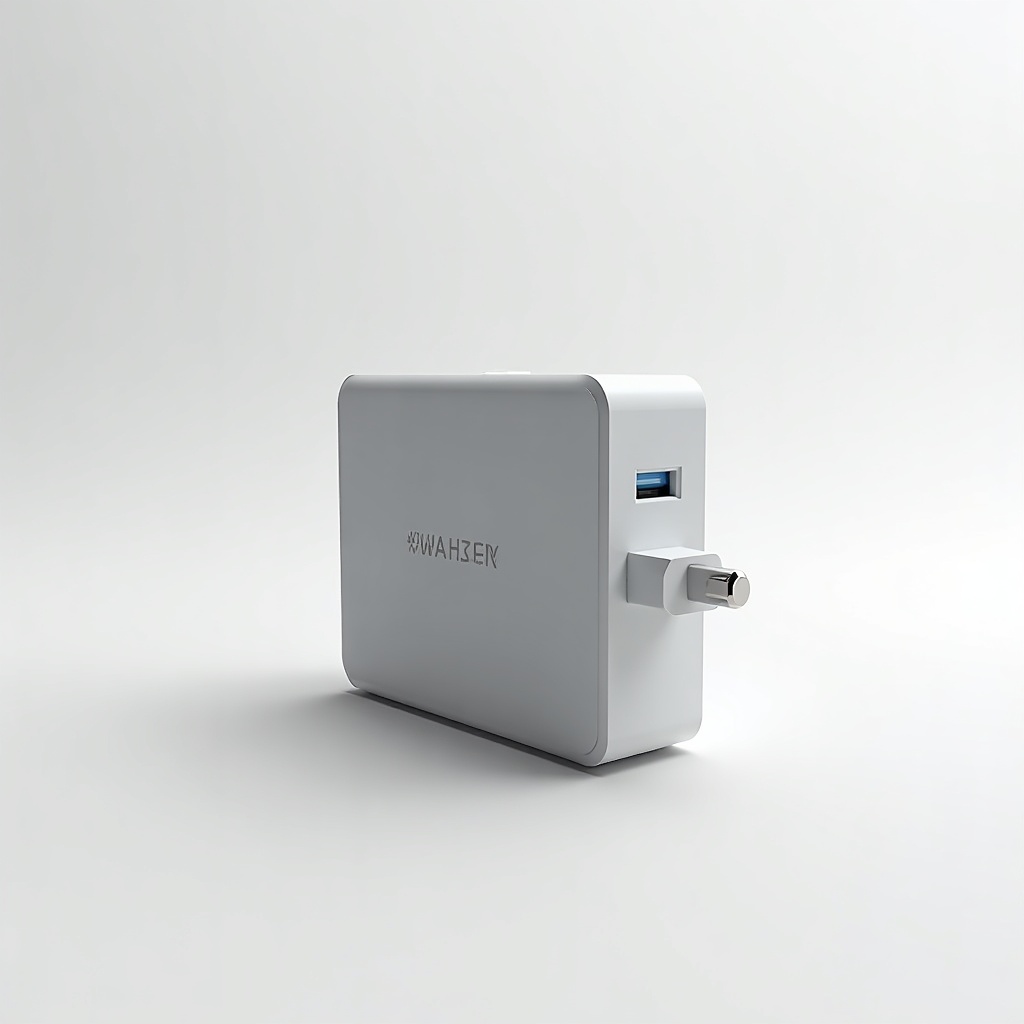
The Anker 533 is a 65-watt wall charger with three ports: two USB-C and one USB-A. GaN (gallium nitride) is the reason it stays small. The chip runs cooler and more efficiently than the old silicon bricks, so Anker can shrink the housing without cooking it. The result is something roughly the size of a golf ball with prongs.
Sixty-five watts is the sweet spot for this category. It's enough to charge a 13-inch MacBook Air or most ultrabooks at full speed when you use a single port, and plenty for phones, tablets, and earbuds. It is not a desktop monster meant to feed a 16-inch MacBook Pro and two iPads simultaneously. Know which problem you're solving.
How it performs day to day
The headline number splits when you plug in more than one device. Owners consistently report that with everything occupied, the top USB-C port drops to around 45W while the rest share the remainder. So a laptop charges a little slower with a phone hanging off the side. For overnight charging or topping up at a coffee shop, nobody notices. If you need full-tilt laptop charging while also juicing a tablet, you'll feel it.
The plug folds flat, which matters more than it sounds. A charger that snags on the bag lining is a charger you stop carrying. This one slides in clean. It runs warm under load like every GaN charger does, but not alarmingly so, and Anker's reputation for not melting itself is well earned at this point.
One genuinely useful detail: it can charge a laptop and still leave two ports free for the small stuff. That's the whole reason to buy a multi-port charger instead of stacking single bricks.
The good and the annoying
Pros: small, three ports, foldable prongs, sensible 65W output, and Anker's track record on safety and warranty. It's the kind of purchase you stop thinking about, which is the highest compliment a charger can earn.
Cons: no cable in the box, so budget for a decent 100W USB-C cable if you want top speeds. The power-sharing split surprises people who expect a flat 65W per port. And the USB-A port feels increasingly like a legacy holdover. Useful if you still own older gear, dead weight if everything you own is USB-C.
Who should buy it, and who shouldn't
Buy it if you travel light and want one brick that covers a laptop plus two accessories. It's our easy pick for carry-on duty and a tidy nightstand setup. At the $40 to $60 range it's priced fairly against the Ugreen Nexode and Baseus equivalents, and Anker's support is the tiebreaker.
Skip it if you own a power-hungry 16-inch laptop or want to fast-charge two laptops at once. Step up to a 100W or 140W model for that. Also skip it if you genuinely only ever charge one phone, where a cheap single-port plug does the same job for less.
The verdict
The Anker 533 does exactly what it promises and gets out of the way. It won't win benchmark wars against bigger GaN chargers, but it nails the common case: one small block, three things charging, no tangle of bricks behind the desk. For most laptops and a normal pile of gadgets, it's an easy recommendation.
Frequently asked questions
- Can the Anker 533 charge a MacBook?
- Yes. At 65W on a single port it fast-charges a 13-inch MacBook Air and most ultrabooks at full speed. A 16-inch MacBook Pro will charge but slower than its stock adapter, so heavy users should look at a 100W model.
- Does it come with a cable?
- No. The 533 ships as the charger only. Pair it with a 100W-rated USB-C cable to hit the fastest speeds, since a weak cable will bottleneck it.
- What happens to charging speed when all three ports are used?
- The 65W is shared. With everything plugged in, the main USB-C port drops to roughly 45W and the rest split the remainder. Fine for overnight or casual charging, noticeable if you need full laptop speed plus a tablet at once.
Marcus has spent over a decade testing consumer tech and gadgets. He cares about whether a product earns its price in real life — not on a spec sheet.