Sea to Summit Aeros Premium Inflatable Pillow Review

A real night's sleep in the backcountry—packs down to the size of an egg.
It packs down to roughly the size of an egg and still gives you a real pillow under your head. For backpackers fighting every gram, that's a rare honest trade.
What the Aeros Premium actually is
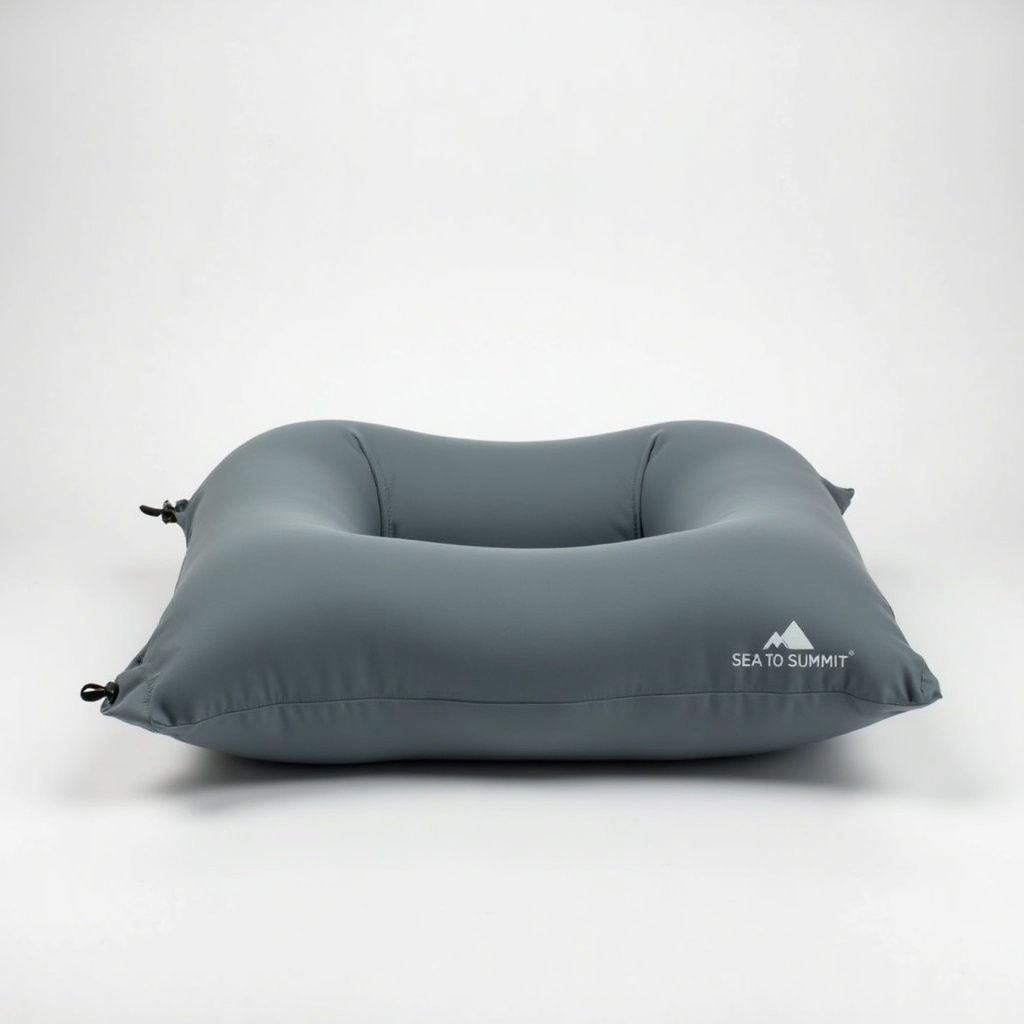
This is Sea to Summit's flagship inflatable camp pillow, sitting a step above their cheaper Ultralight version. You blow it up with a few breaths through a multifunction valve, twist to lock the air, and you've got a contoured pillow with a curved shape meant to cradle your head and stop the dreaded sideways slide.
The top is a brushed knit polyester that feels nothing like the slick vinyl most inflatables use. That fabric is the whole point. It's the difference between sleeping on a pillow and sleeping on a pool toy. Packed, it disappears into a stuff sack about the size of a large egg and weighs around 80 grams.
How it performs in the backcountry
The contoured design and the internal sinus curve are more than marketing. Owners consistently report that the dip in the middle keeps your head from rolling off, which is the failure mode of flat inflatable pillows. Side sleepers tend to like it. The loft is genuinely adjustable, so you can let a little air out for a softer, lower profile or pump it firm.
The common gripe is the same one that haunts every air pillow: it can feel bouncy and a touch loud against a sleeping pad. The fix most people land on is pairing it with a stuff sack of clothes underneath, or anchoring it to the pad. Sea to Summit sells a Pillow Lock system for exactly this if your pad supports it. Inflate it slightly soft rather than rock-hard and the squeaky-balloon feeling mostly goes away.
Pros and cons worth knowing
Pros: tiny packed size, low weight, an actually comfortable fabric face, a valve that lets you fine-tune firmness, and Sea to Summit's reliable build quality. The Premium's larger Deluxe size is a worthwhile upgrade if you have broad shoulders or just want more real estate.
Cons: the price stings for a pillow you inflate with your lungs, the slipperiness against a smooth pad is real, and like all inflatables it's a candidate for a slow leak eventually. It also won't satisfy anyone who wants the plush mass of a compressible foam pillow. This is comfort engineered around weight and pack size, not luxury.
Who it's for and who should skip it
Buy it if you're a backpacker, bikepacker, or thru-hiker who counts grams and refuses to ruin a trip on a balled-up jacket. It's also a smart travel pillow for carry-on minimalists. The brushed top earns its keep on multi-night trips where comfort compounds.
Skip it if you're car camping with room to spare. At that point a Therm-a-Rest Compressible foam pillow gives you more plush for similar money and never needs inflating. And if a slick, slightly bouncy surface drives you up the wall, no amount of clever shaping will fully convert you.
The verdict
The Aeros Premium is the inflatable pillow most experienced backpackers end up recommending, and that reputation is earned. It's not cheap for what it is, but the packed size and the genuinely usable fabric face justify the spend for weight-conscious trips. Expect to pay somewhere in the $35 to $50 range on Amazon depending on size and color.
Pair it with a pad lock or a clothes stuff sack to kill the slide, inflate it a little soft, and it does the one thing a backcountry pillow has to do: it lets you forget about it and sleep.
Frequently asked questions
- Is the Sea to Summit Aeros Premium worth the price?
- For backpackers and travelers who prioritize tiny pack size and low weight, yes. The brushed fabric top and contoured shape make it noticeably more comfortable than budget inflatables. Car campers will get more plush per dollar from a compressible foam pillow.
- Does the Aeros Premium pillow slide around on a sleeping pad?
- It can on slick pads. The usual fixes are Sea to Summit's Pillow Lock system, tucking it against a stuff sack of clothes, or slightly underinflating it so it conforms better and grips more.
- How small does it pack down?
- Deflated and rolled into its stuff sack, it's roughly the size of a large egg and weighs around 80 grams for the regular size, which is why it's popular with ultralight hikers.
Marcus has spent over a decade testing consumer tech and gadgets. He cares about whether a product earns its price in real life — not on a spec sheet.