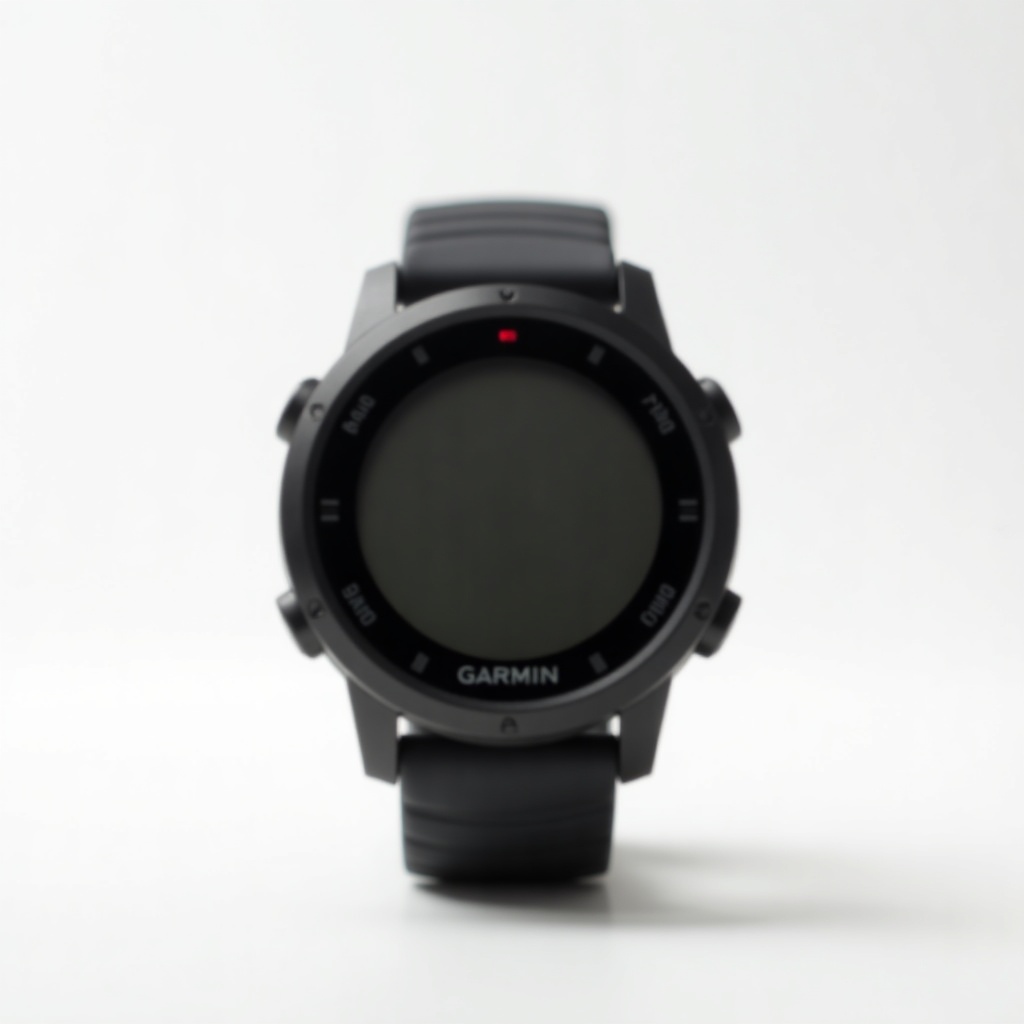
Garmin Forerunner 55 GPS Running Watch Review

Accurate GPS pace, suggested workouts, and a two-week battery for runners who skip the bells and whistles.
The Forerunner 55 nails the one thing budget running watches usually botch: fast, accurate GPS that tells you your real pace without a phone in your pocket. It skips the maps and music and charges roughly $50 less than the next Garmin up.
What the Garmin Forerunner 55 actually is
This is Garmin's entry-level GPS running watch, sitting below the 165, 265, and 965. It's small, light, and built around running first. You get GPS pace and distance, a wrist heart rate sensor, daily suggested workouts, recovery time estimates, and a race predictor. No maps. No onboard music. No touchscreen. You poke at five physical buttons, which is honestly the right call for sweaty fingers mid-run.
Price floats in the $170 to $200 range at Amazon, and it goes on sale often. That puts it against the Coros Pace 3 and Polar Pacer, both worth a look, but the Garmin wins on app and ecosystem maturity.
How it performs day to day
GPS lock is quick and the pace reading is steady, which is the whole point. Owners consistently report the distance tracking holds up against measured routes and treadmill runs. It's not multi-band GPS like the pricier models, so dense city canyons and heavy tree cover can nudge the track around. For most road and trail running, it's plenty accurate.
The headline feature is battery. Garmin rates it at two weeks in smartwatch mode and around 20 hours with GPS running. In practice that means you charge it maybe twice a month and never think about it before a long run. Compare that to an Apple Watch you're plugging in nightly.
Daily Suggested Workouts are smarter than you'd expect at this price. The watch looks at your recent training and recovery and hands you an easy run, a tempo, or intervals. It's not a coach replacement, but for someone who doesn't want to build their own plan, it removes the guesswork. Sleep tracking and basic stress and Body Battery metrics are here too, and they're fine, not exceptional.
The cons worth knowing
Wrist heart rate is the weak spot, as it is on nearly every watch. For steady runs it's close enough. For sharp intervals it lags. If you train by heart rate zones seriously, pair a chest strap. The watch supports it.
The screen is a small, low-res memory-in-pixel display. Readable in bright sun, perfectly functional, and dull-looking next to an AMOLED. There's no altimeter, so elevation comes from GPS and isn't precise. And no music storage means your phone comes along if you want tunes.
Who should buy it, and who should skip it
Buy it if you're a new or casual runner, training for a 5K to a marathon, who wants reliable pace and distance without spending $400. It's also a great first watch for teens and anyone returning to running who doesn't want to overthink the gadget.
Skip it if you want onboard maps for trail navigation, music without your phone, or top-tier multi-band GPS. Step up to the Forerunner 165 for an AMOLED screen and music, or the 265 if you want the full training-load picture. Trail and ultra runners should look higher up the line entirely.
The verdict
The Forerunner 55 is the watch we point most beginner and budget runners toward. It does the core job better than almost anything near its price, the battery is genuinely set-and-forget, and Garmin's app and Daily Suggested Workouts give you room to grow. You're giving up screen quality, maps, and music, and that's a fair trade at this price. Easy recommendation.
Frequently asked questions
- Is the Garmin Forerunner 55 accurate for GPS distance and pace?
- Yes. It uses single-frequency GPS and owners report solid accuracy on roads and open trails. Heavy tree cover or tall buildings can cause minor drift, but for typical running it's reliable.
- How long does the Forerunner 55 battery last?
- Garmin rates it at up to two weeks in smartwatch mode and around 20 hours with GPS active. Most users charge it roughly twice a month.
- Should I buy the Forerunner 55 or the Forerunner 165?
- Get the 55 to save money and keep things simple. Step up to the 165 if you want a brighter AMOLED screen and onboard music, which the 55 doesn't offer.
Marcus has spent over a decade testing consumer tech and gadgets. He cares about whether a product earns its price in real life — not on a spec sheet.