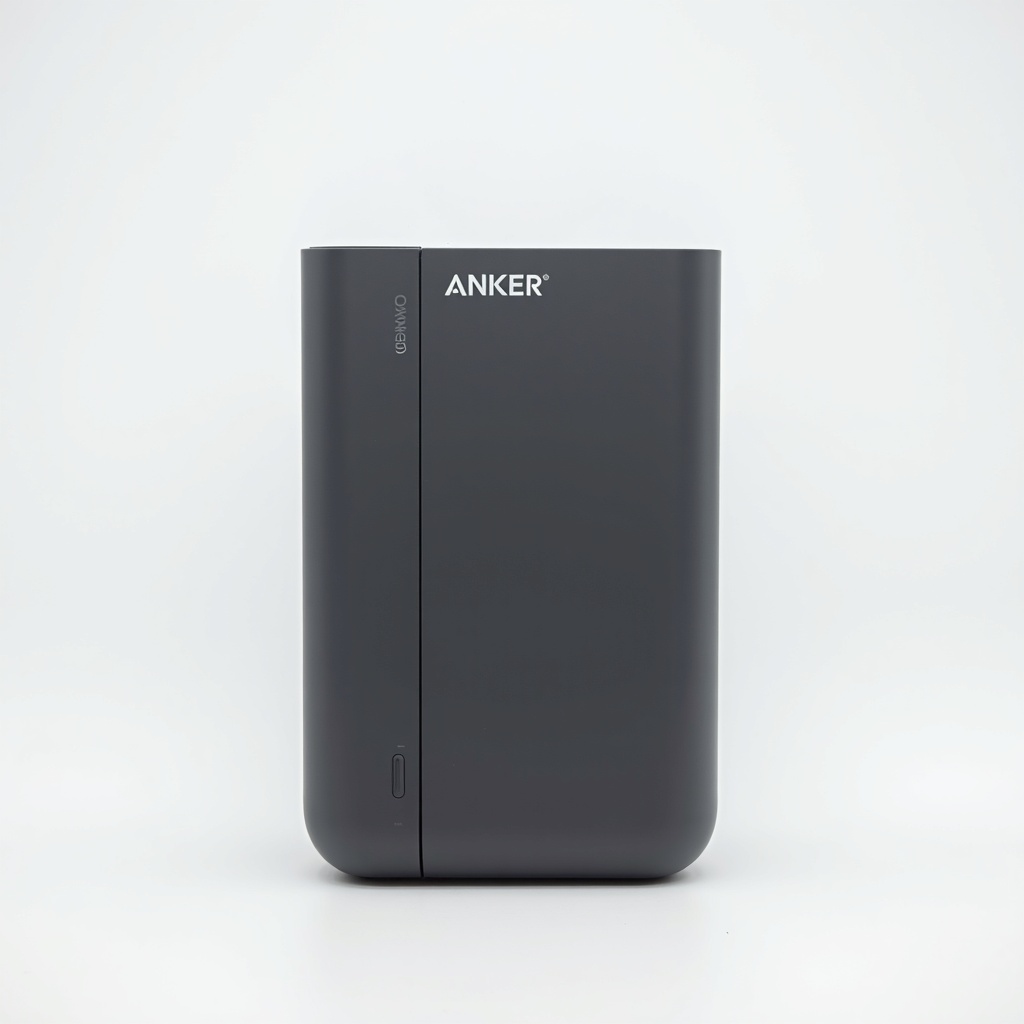
Anker 521 Portable Power Station (PowerHouse 256Wh) Review

Pocket-sized power station that keeps phones, laptops, and lights running off-grid.
A power station small enough to toss in a backpack that still keeps your phone, laptop, and a string of lights alive when the grid isn't an option.
What the Anker 521 actually is
The Anker 521 is a 256Wh lithium iron phosphate (LiFePO4) power station, which puts it firmly in the small-and-portable camp. It weighs around 8 pounds and has a handle molded into the top, so it carries more like a lunchbox than the suitcase-sized units people picture when they hear 'power station.'
Port-wise you get two AC outlets running off a 200W inverter, a couple of USB-C ports, USB-A, and a 12V car socket. That LiFePO4 chemistry is the headline feature at this price. Anker rates the cells for roughly 3,000 charge cycles, which means you could top it up most days for years before capacity meaningfully drops. Cheaper rivals using standard lithium-ion typically promise a few hundred cycles.
How it performs day to day
For the jobs it's built for, the 521 is a quietly reliable workhorse. Phones charge dozens of times over. A typical laptop gets several full recharges. Running a CPAP overnight, keeping a router alive during a short outage, or powering camp lights and a small fan is well within its comfort zone.
The limitation is that 200W inverter. This is not the box for a coffee maker, hair dryer, microwave, or anything with a heating element. Plug in something that draws more than 200W (300W surge) and it simply shuts off to protect itself. Know your wattage before you buy and you'll never be disappointed. Treat it like a wall outlet for everything and you will be.
Recharging is reasonable rather than fast. Off the wall it takes a few hours to fill, and it accepts solar input if you add a compatible panel, which makes it genuinely useful for multi-day off-grid trips. The fan stays mostly silent at light loads and only spins up when you push the AC outlets hard.
The good and the annoying
On the plus side: the LiFePO4 longevity is the best reason to pick this over a no-name competitor, the build feels solid, and the size-to-capacity ratio is genuinely travel-friendly. Anker's reputation for honest battery ratings and decent support also counts for something in a category full of inflated spec sheets.
The downsides are real but predictable. The 200W ceiling rules out a lot of household appliances. There's no fast-charging wizardry here, and the display is basic. A few owners wish it had more than two AC outlets. None of these are dealbreakers if you bought it for the right reasons.
Who should buy it, and who should skip it
Buy the 521 if you want a dependable backup for phones, laptops, tablets, lights, a CPAP, or charging gear on camping trips and road trips. It's also a sensible pick for renters who want a small outage buffer without committing to a giant unit. The long cell life means it's a good fit for anyone planning to use it regularly for years.
Skip it if you need to run anything with a motor or a heating element, or if you want to power tools or a fridge for long stretches. Step up to the Anker 535 (512Wh, 500W) or a 700W-plus model instead. People who only need to top up a phone now and then will be better served by a cheaper power bank.
The verdict
The Anker 521 is one of the easiest small power stations to recommend, as long as you respect its 200W limit. You're paying for proven LiFePO4 longevity and Anker's reliability rather than raw output, and for low-draw electronics that's exactly the right trade. At roughly $180 to $250 it's fairly priced for what it does well.
It won't run your kitchen. It will quietly keep the important small stuff alive for years, off-grid or during an outage. For most people who want exactly that, it's an easy yes.
Frequently asked questions
- Can the Anker 521 power a laptop?
- Yes. Most laptops draw well under the 521's 200W limit, and you can expect several full recharges from a single fill, more if you use the USB-C port directly instead of the AC outlet.
- Will it run a mini fridge or coffee maker?
- A coffee maker, no. Its heating element exceeds the 200W inverter. A small low-wattage fridge may work briefly, but you'll get short runtime. For appliances like these, step up to the Anker 535 or a 500W-plus unit.
- How long does the Anker 521 last on a charge?
- With 256Wh of capacity it'll recharge a phone dozens of times, a laptop several times, or run a 10W camp light for around 20 hours. Actual runtime depends on the device's wattage.
Marcus has spent over a decade testing consumer tech and gadgets. He cares about whether a product earns its price in real life — not on a spec sheet.