
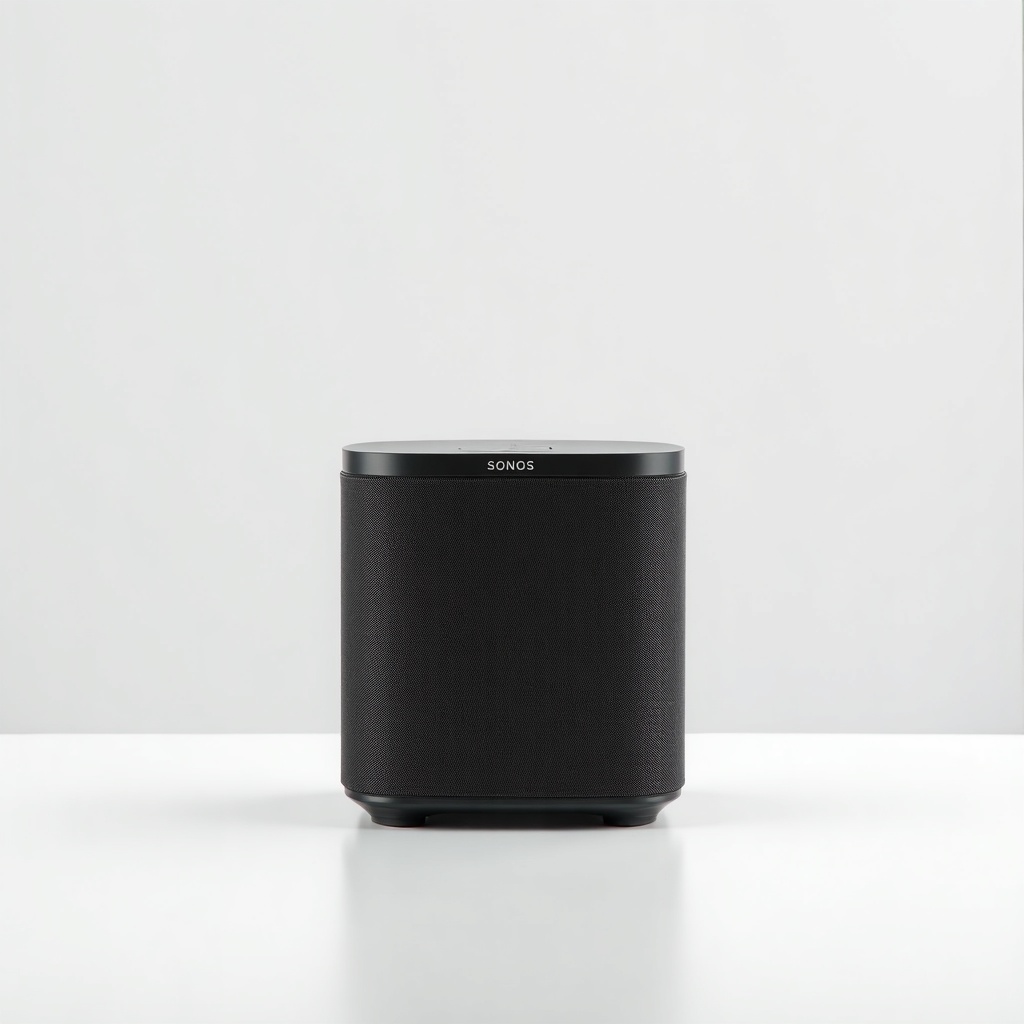
Sonos Era 100 Review

Compact smart speaker with surprisingly big, room-filling stereo sound.
The Era 100 is the Sonos speaker that finally gives you real stereo sound from a single compact box, and it does it for around two hundred bucks.
What the Sonos Era 100 actually is
This is the replacement for the long-running Sonos One, and the headline change is stereo. Where the old model used a single mid-woofer, the Era 100 packs two angled tweeters plus a bigger woofer, so you get genuine left-right separation from one unit. On a speaker this size that's not a gimmick. Vocals sit center, guitars and synths spread out, and music stops sounding like it's coming from a point in the wall.
It runs in the standard Sonos app, plays nice with AirPlay 2, and supports both Amazon Alexa and Sonos' own voice assistant. Apple Music, Spotify, the usual streaming crowd. Pair two of them for true stereo, or use a pair as rears in a home theater setup with a Sonos soundbar. Price runs roughly $200 to $250 depending on sales.
How it sounds day to day
Owner consensus is consistent and it matches what the specs promise: this thing is loud and warm for its footprint. It fills a kitchen, a bedroom, a medium living room without strain. Bass has real body, more than the One ever managed, and the Trueplay tuning that adjusts output to your room genuinely helps. Android users can now run a quick tuning pass too, not just iPhone owners.
It's not audiophile-neutral. Sonos voices these for crowd-pleasing fullness, so the low end can feel a touch generous and the treble isn't the last word in detail. For podcasts, playlists and background listening it's excellent. If you're critically auditioning a jazz recording, you'll notice the limits. Most people won't care, and most people are right not to.
The good and the annoying
On the plus side: stereo from one box, easy multi-room grouping, a USB-C line-in option, Bluetooth (a first for a Sonos speaker this small), and physical touch controls including a useful volume slider. Build quality is solid and the thing looks clean on a shelf.
The annoyances are real though. The USB-C line-in needs a separate adapter that costs extra, which is irritating on a $200 product. There's no Google Assistant anymore, a casualty of the Sonos-Google legal fight, so Android-leaning households lose an option. And Sonos' app overhaul has had a rocky stretch, with owners reporting connection hiccups. It's improved, but it's a known sore spot.
Who should buy it, who should skip it
Buy the Era 100 if you want one great-sounding smart speaker for a room, or if you're already in the Sonos ecosystem and want to add to it. It's the default recommendation for most people who care about sound and don't want a separate stereo. A pair makes a legitimately good music system for a bedroom or office.
Skip it if you mostly want Google Assistant, if you need room-shaking bass for a big open space (look at the larger Era 300 or add a Sub), or if you just want a cheap voice speaker for timers and weather. An Amazon Echo costs a fraction of this and the Era 100 would be wasted on it.
The verdict
The Era 100 is the smart speaker we'd point most buyers toward in this price range. Big stereo sound from a small box, deep Sonos integration, and Bluetooth finally onboard. The line-in adapter tax and the patchy app history keep it from a perfect score. Strong buy anyway.
Frequently asked questions
- Is the Sonos Era 100 better than the Sonos One?
- Yes. The Era 100 adds true stereo separation, a bigger woofer, Bluetooth, USB-C line-in and Android Trueplay tuning. It's a clear upgrade in sound and flexibility, which is why it replaced the One in the lineup.
- Does the Sonos Era 100 have Bluetooth?
- Yes, it supports Bluetooth, which is a first for a compact Sonos speaker. That means you can stream directly from a phone without Wi-Fi, useful for guests or quick playback.
- Should I buy one Era 100 or two?
- One is plenty for a kitchen, bedroom or background listening. Buy two if you want a proper stereo system for a living room or office, since a pair noticeably widens the soundstage and adds power.
Marcus has spent over a decade testing consumer tech and gadgets. He cares about whether a product earns its price in real life — not on a spec sheet.